Patagonia Quartzite Grades: A vs B vs C Slabs & Blocks Guide

Before You Buy Granite: Important Facts to Consider
May 4, 2026
Top 7 Imported Marbles to Elevate Luxury Home Interiors
September 16, 2026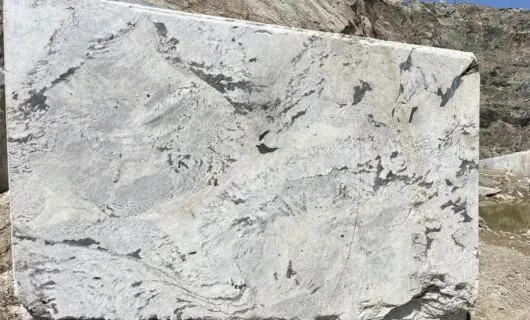
Patagonia quartzite is widely recognized as one of nature’s most dramatic natural stone surfaces. Sourced primarily from pegmatite formations in Brazil, it pairs crystalline quartz windows with creamy feldspar deposits and subtle dark mineral accents. Yet across stone yards and distributor warehouses, slabs bearing the same name can range dramatically in appearance, structural reliability, and price.
Understanding patagonia quartzite quality grades is critical for architects, fabricators, and property owners. Because two bundles can look strikingly similar in low-resolution photographs, knowing the difference between Grade A, Grade B, and Grade C material protects your design vision, fabrication budget, and finished installation.
What Determines Patagonia Quartzite Quality?
Unlike homogenous sedimentary quartzites such as Taj Mahal or Sea Pearl, Patagonia is geologically classified as an intrusive igneous pegmatite. Magma cooled extremely slowly deep underground, allowing massive crystals of quartz, potassium feldspar, and trace biotite, amphibole, or tourmaline to crystallize side by side.
Because quartz and feldspar have distinct cleavage patterns, expansion rates, and hardness levels (Mohs 7 for quartz vs. Mohs 6 for feldspar), the stone contains natural interfacial boundaries. The overall patagonia quartzite quality depends on how tightly knit these minerals are, the clarity of the crystalline segments, and the degree of geological fissuring present before processing.
Core Criteria in Quartzite Quality Grades
Evaluating quartzite quality grades requires examining both aesthetic purity and structural integrity. Stone specialists and quarries assess blocks and slabs across five technical dimensions:
1. Quartz Clarity and Translucency Ratio
The signature allure of Patagonia quartzite is its backlighting capability. In premium grades, the quartz sections are gem-like, sharp, and clear. In lesser grades, the quartz appears cloudy, grey, or muddy, significantly reducing its luminous depth when illuminated from behind.
2. Feldspar Matrix and Color Uniformity
The opaque areas of Patagonia quartzite should present balanced shades of ivory, soft cream, and warm taupe. Low-quality blocks often feature uneven grey muddiness, muddy greenish undertones, or blotchy patches that distract from the crystalline zones.
3. Micro-Fissure Density and Natural Fractures
Pegmatitic rocks naturally form internal micro-fractures during tectonic cooling. Top-grade slabs have tight, healed structures. Lower grades contain unhealed rift lines, dry hairline cracks, and structural faults that threaten edge stability during cutting.
4. Resin Infiltration and Polymer-to-Mineral Balance
Most exotic stone blocks undergo vacuum-assisted epoxy or resin infiltration to reinforce natural fissures before gang-saw slicing. Slabs that rely on high concentrations of surface resin to bridge extensive voids risk yellowing over time under intense lighting or UV exposure. High-grade material requires minimal structural resin.
5. Oxidation and Iron Staining
Natural moisture infiltration in the quarry can oxidize internal iron compounds, turning ivory feldspar into harsh, muddy rust rings. Subtle golden veins add character, but widespread yellowing indicates weathering and diminished structural hardness.
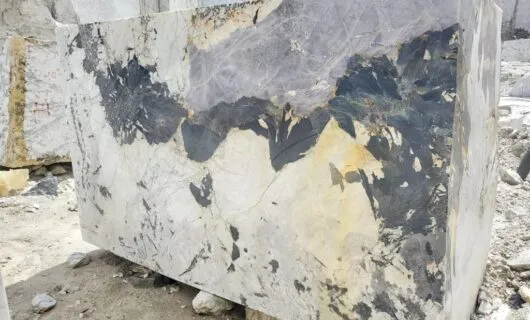
Patagonia Quartzite Grades: A vs B vs C Slabs & Blocks
To standardize material procurement across quarries and distributors, slabs and blocks are grouped into three primary quality tiers:
| Evaluation Metric | Grade A (Exotic Premium) | Grade B (Standard Commercial) | Grade C (Utility / Economy) |
| Translucent Quartz Ratio | 35% – 50%+ | 20% – 30% | Under 15% |
| Crystal Clarity | Gem-like, vitreous, luminous | Slightly milky or cloudy | Muddy, fractured, dull |
| Feldspar Coloration | Clean ivory, cream, warm champagne | Mixed cream with minor grey/tan zones | Inconsistent, grey, heavy brownish cast |
| Resin Dependency | Low (fine surface polish refinement) | Moderate (fillers along boundary seams) | Heavy (structural mesh and deep resin pools) |
| Structural Yield | 90% – 98% usable surface | 75% – 85% usable surface | Under 70% usable surface |
| Ideal Application | Backlit feature walls, luxury islands | Flooring, standard vanities, accents | Small cut-to-size pieces, low-traffic areas |
Grade A: The Premium Architectural Choice
Grade A material represents the finest yield from the quarry. These patagonia quartzite slabs feature extensive translucent quartz windows framed by clean, warm-toned feldspar and crisp dark veining.
- Fabrication Performance: Outstanding stability during waterjet cutting, sink cutouts, and 45-degree mitered edging.
- Lighting Response: Exceptional light diffusion without dark polymer blind spots or cloudiness.
- Best Use: High-visibility backlit statement installations, luxury waterfall kitchen islands, and upscale hospitality reception desks.
Grade B: Standard Commercial Quality
Grade B slabs offer a balance between visual appeal and project economics. While visually attractive, the quartz windows are typically smaller or slightly milky, and the feldspar may contain slight grey cast variations.
- Fabrication Performance: Good structural integrity, though fabricators must map cuts carefully to avoid cutting intricate details through dry micro-fissures.
- Lighting Response: Moderate translucency; backlighting shows localized illumination rather than whole-slab radiance.
- Best Use: Standard kitchen countertops, bathroom vanities, fireplace surrounds, and commercial floor tiles where continuous illumination is not mandatory.
Grade C: Utility and Economy Grade
Grade C represents the bottom tier of extracted blocks and processed slabs. These slabs often exhibit low quartz content, cloudy patches, heavy iron staining, and wide geological fracture zones.
- Fabrication Performance: High risk of edge chipping, blowout, or snapping along quartz-feldspar boundaries during CNC milling. Slabs often require heavy fiberglass mesh backing and substantial epoxy fills.
- Lighting Response: Poor; dense mineral clouds and opaque resin blocks restrict light passage.
- Best Use: Secondary utility areas, small vanities, thresholds, or small-format cut-to-size pavers.
Evaluating Patagonia Quartzite Blocks vs. Slabs
Inspecting material at the block stage requires a different skill set than selecting finished slabs:
Quarry Block Inspection                  Slab Yard Inspection
-----------------------                  --------------------
• Acoustic hammer resonance test         • 3000K–4000K LED backlighting check
• Visual boundary fracture mapping       • Oblique light surface resin sweep
• Gang-saw cutting yield projection      • Edge and mesh backing integrity audit
- At the Quarry (Blocks): Experienced inspectors perform acoustic resonance tests using a stone-testing hammer. A clear, ringing tone indicates a dense, cohesive internal structure, while a dull thud warns of internal separation. Inspectors also wash the block faces to map fissure trajectories and confirm that translucent quartz pockets run deep into the block rather than terminating near the surface.
- At the Stone Yard (Slabs): Always inspect slabs in person or through continuous high-definition video under neutral lighting (4000K). Shine a high-lumen flashlight from behind the slab to verify crystal clarity, and use low-angle oblique lighting across the face to spot resin-filled depressions or uneven polishing along mineral borders.
Fabrication and Specification Best Practices
To extract the maximum value from your chosen grade, incorporate these engineering considerations:
- Tooling Speed: Quartz is substantially harder than feldspar. Fabricators should calibrate CNC bridge saws and waterjets to slower feed rates to prevent deflection and edge blowouts when crossing from softer feldspar into hard crystal.
- Backlighting Engineering: For Grade A illuminated features, use LED light panels with a high Color Rendering Index (CRI > 90) set between 3000K (warm white) and 4000K (natural white). Place lights 50 mm to 80 mm behind a light diffuser to eliminate hot spots.
- Sealing and Maintenance: While pure quartz is practically non-porous, the accompanying feldspar matrix contains natural absorption capacity. Treat finished surfaces with a high-grade penetrating impregnator to prevent oil stains, especially around cooktops and food preparation areas.
Selecting the right grade comes down to project scope. For radiant, backlit installations and complex mitered joinery, investing in Grade A delivers unmatched durability and visual depth. For standard surface applications where backlighting is unnecessary, a well-selected Grade B slab offers the signature beauty of Patagonia quartzite at a balanced price point. Partnering with a trusted exotic supplier in India ensures access to authentic, hand-inspected blocks and bundles tailored specifically to your architectural requirements.